How Psilocybin Changes Brain Connectivity: Insights from Modern Neuroscience
Exploring how psychedelic compounds reshape the mind’s information highways
Scientists dressed in lab coats, in a lab far away, smarter than both you and me have brought to light research that the psychoactive ingredient in shrooms can actually change the way the brain works
Recent breakthroughs in neuroscience have revealed something remarkable: psilocybin—a naturally occurring psychedelic compound—can directly reshape how information flows through the brain.
Researchers have compared the brains of people given this compound to those who received a placebo. Their discovery? The neural pathways—the "information highways"—in the brain are fundamentally altered under the influence of psilocybin.
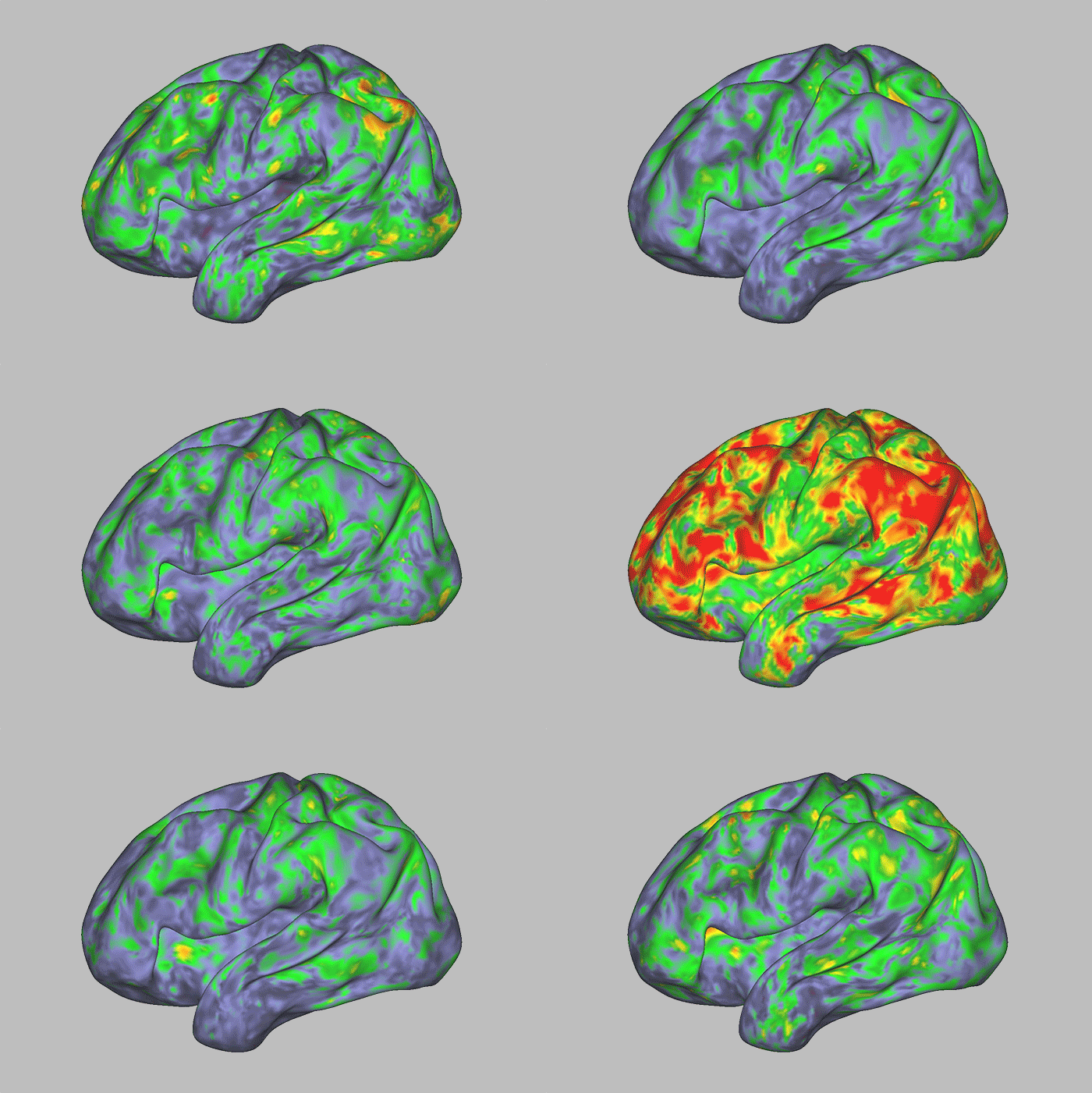
Visualization: Heat map shows psilocybin destabilizing brain networks, paving the way for lasting stability.
Imagine your mind as a network of highways busy as LA rush hour—each region of your brain communicating, but mostly sticking to its own routes. Psilocybin doesn’t tear down existing roads; instead, it forms new pathways, linking regions that rarely communicate.
What the Science Tells Us
- Increased Connectivity: Under psilocybin, distinct brain networks start “talking” to each other in new ways. This can temporarily dissolve the usual boundaries between specialized regions, building a web of new connections [(Nature, 2024)][2].
- Mental Flexibility: These novel routes may explain the sense of expanded consciousness, creative insight, or emotional breakthroughs that some report.
- Implications for Mental Health: Scientists suggest this reorganization could play a role in easing rigid thinking patterns commonly seen in depression, PTSD, and obsessive-compulsive disorders [(UCSF, 2022)][31][34].
- Lasting Change: Some studies find that shifts in the brain’s connective patterns can endure long after the immediate effects fade—hinting at deep and lasting rewiring [(Frontiers Neurosci, 2025)][27].
“With these new information highways, parts of the brain that weren’t able to talk to one another are now able to communicate.”
Focus, Clarity, and Brain “Traffic”
It might sound far-fetched, but by reshuffling the brain’s “traffic,” psilocybin could help clear mental gridlock—paving the way for greater focus, clarity, and resilience.
The result: a brain less locked in repetitive loops, and more open to adaptation and new perspectives.
References & Further Reading
- Nature (2024): “Psilocybin desynchronizes the human brain”
- UCSF (2022): “Psilocybin Rewires the Brain for People with Depression”
- Frontiers in Neuroscience (2025): “Dose-dependent changes in global brain activity and functional connectivity”
- Wired (2014): “How Magic Mushrooms Rearrange Your Brain”
- NIH (2025): “How psychedelic drugs alter the brain”
Disclaimer: This article is for informational purposes only and does not endorse the use or misuse of any controlled substances. Always consult with a healthcare provider before considering any changes to mental health treatments or supplement routines.